




Table of Contents
- What Are Dermal Fillers?
- Is It Right For Me?
- Procedural Steps Involved
- Expected Results and Long-Term Outcomes
- Top Benefits of Dermal Filler Treatment
- How Much Will Dermal Fillers Cost?
- Why Choose Dr. Mehdi Balakhani for Dermal Fillers in New Castle County, DE
- Frequently Asked Questions About Dermal Fillers
- Schedule a Consultation
- Words to know
If volume loss, lines, or uneven contours bother you, dermal fillers can help restore balance and softness to your features. This non-invasive option adds support beneath the skin for smoother, fuller-looking areas. Patients seeking dermal fillers throughout Newark and New Castle County, DE, often choose this treatment for visible improvement without surgery.
What Are Dermal Fillers?
Dermal fillers are injectable fillers placed beneath the skin to add volume, smooth wrinkles, and refine facial contours. These cosmetic fillers use biocompatible materials that integrate naturally with facial tissue. Treatment plans focus on balance, proportion, and natural movement.
Why choose injectable fillers?
Visible signs of facial aging develop over time due to factors such as sun exposure, genetics, and lifestyle. One of the earliest signs of aging is a loss of facial fullness, accompanied by the development of wrinkles. Softening of these facial lines and restoring volume and fullness in the face can be achieved non-surgically with injectable fillers.
If you would like to restore facial contours or reduce the appearance of lines and creases, injection therapy with soft tissue fillers may be right for you. These injectable fillers can:
- Plump thin lips
- Enhance shallow contours
- Soften facial creases and wrinkles
- Improve the appearance of recessed scars
However, soft tissue augmentation does not stop the aging process. If you wish to change the contours of your face, surgical procedures such as a facelift, brow lift, or eyelift may be the answer. Non-surgical rejuvenation treatments, such as injectable fillers, cannot achieve the same results but may help delay when a facelift becomes appropriate.
What are the different types of fillers?
Collagen is a natural protein that supports the health and appearance of the skin. Injectable collagen formulas derived from human dermis include Cosmoderm and Cosmoplast. Zyderm and Zyplast are bovine collagen products that, unlike human-derived collagen, require prior allergy testing. The results may last 2-4 months.
Hyaluronic acid is a natural substance found in our bodies. It is well-suited for plumping thin lips and filling facial creases, such as nasolabial folds. It may also be appropriate for some surface wrinkles and concave scars. The results may last six months or longer.
Hydroxylapatite is a mineral-like compound found naturally in human bones, suspended in a gel-like formulation. It is the heaviest of the facial filler treatments and is recommended for filling deeper creases such as nasolabial folds, marionette lines, and frown lines, as well as enhancing fullness of the cheeks and other facial contours.
Human fat, harvested from your own body, can be reinjected to enhance facial fullness, fill deep creases, and build up shallow contours. Fat injections treatment requires a more extensive procedure than other injectable fillers because it uses liposuction to extract fat before injection.
Treatment results can last up to a year or more, in some cases, and are highly variable.
NOTE: Fat can be stored for your own future treatment. The duration of results from preserved fat is not as favorable as fat used at the same time it is harvested.
A note about the FDA and injectable fillers:
The U.S. Food and Drug Administration reviews and approves pharmaceutical fillers in the same manner as medical devices. However, some fillers may be used off-label, meaning they are approved medical treatments but not directly reviewed for a specific application. The options discussed in this brochure are among the current fillers preferred by plastic surgeons. Some are available for general use; others are not. Regulatory status may change.
Is It Right For Me?
While less invasive than surgical cosmetic procedures, soft tissue augmentation is a medical procedure. You should do it for yourself, not to fulfill someone else’s desires or to try to fit any sort of ideal image. Tissue fillers are a good option for you if:
- You are physically healthy
- You don’t smoke
- You have a positive outlook and specific, but realistic goals in mind for the improvement of your appearance
Procedural Steps Involved
What happens during soft tissue augmentation?
- Your plastic surgeon, Dr. Balakhani, will carefully evaluate your facial appearance and skin tone and examine the areas of your face to be augmented with injectable fillers.
- Strategic points on your face may be marked to guide the placement of the filler injection sites.
- The injection sites will be cleansed with an antibacterial agent, and icing or a topical numbing agent may be offered to make more sensitive patients comfortable. In some cases, the filler itself will contain an anesthetic agent. In other cases, a local anesthetic may be administered to the treatment site.
- Injection takes only a few moments per site and a few minutes for a course of treatment.
- Following the injection, any markings will be cleansed, and icing may be offered to alleviate any temporary, minor discomfort. Makeup may be carefully reapplied, provided care is taken not to apply pressure to the treatment area.
Filling wrinkles or recessed scars involves multiple injections. In some cases where deeper filler injection is required, a local anesthetic may be used before treatment.
Common sites for deeper tissue fillers include the nasolabial folds and marionette lines, or to enhance cheek fullness.
Line Filling


Lip Augmentation
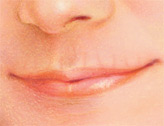
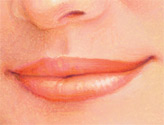
Soft tissue augmentation of the lips requires multiple injections to distribute the filler for enhanced lip fullness and to raise or define a cupid’s bow or vermillion border.
Nasolabial Folds


An improved appearance is visible almost immediately, although minor swelling or bruising may appear at the injection sites.
With some fillers, a slightly “over-filled” appearance may be initially present. These conditions will resolve within a few hours or, at most, a few days. The duration may be as long as a few weeks with the injection of one’s own harvested fat.
Important facts about the safety and risks of tissue fillers
The decision to undergo soft tissue augmentation is extremely personal, and you’ll need to consider whether the benefits will achieve your goals and whether the risks and potential complications are acceptable.
Your plastic surgeon and/or staff will explain in detail the risks associated with surgery. You will be asked to sign consent forms to ensure that you fully understand the procedure you will undergo, as well as any associated risks and potential complications.
Complications from fillers are uncommon.
The risks vary depending on the specific filler used and the relative permanence of the filler substance and include:
- Fillers derived from non-human sources may require a pre-treatment allergy test
- Infection at the injection site
- Fillers that are not completely fluid and contain microscopic granular substances carry a risk of “clumping” as a result of facial movement and the natural aging process. Over time, these can result in lumps or nodules that may require surgery to treat
- Acne-like skin eruptions
- Antibodies to filler material may reduce the effectiveness of future injections
- Asymmetry
- Bleeding, bruising, and swelling
- Filler material may migrate from the original site and produce temporary paralysis of other muscle groups or other unintended effects
- Skin might die (skin necrosis)
- Skin rash, itching, and swelling
- Skin redness
- Skin sensitivity
- Under or overcorrection of wrinkles
Choose a professional. Although tissue augmentation is a quick, in-office procedure that can produce a marked improvement in restoring facial fullness and a more youthful appearance, effective and safe use requires a physician with specialized training and a thorough understanding of facial anatomy to recommend and inject an appropriate filler.
Choosing a plastic surgeon to treat your face with injectable fillers for facial enhancement means that your treatment will be performed by someone who not only has training in injection therapy but also in all types of non-surgical and surgical facial rejuvenation.
Be sure to ask questions: It’s very important to ask your plastic surgeon questions about your tissue filler procedure. It’s natural to feel some anxiety, whether it’s excitement for your anticipated new look or a bit of preoperative stress. Don’t be shy about discussing these feelings with your plastic surgeon.
Expected Results and Long-Term Outcomes
My recovery journey
The results of soft-tissue augmentation with injectable fillers are immediately apparent. Your initial appearance after treatment with any filler may include:
- Mild swelling or bruising
- Temporary numbness or redness
- An “over-filled” appearance to treated areas
These conditions can be alleviated with topical icing and will improve within hours to a few days.
When fat is used as a filler, these conditions may persist for several weeks.
Expected results and long-term outlook
The results of soft tissue augmentation with injectable fillers are not permanent, even though a filler substance may be considered permanent. The continued aging of your face and variables in the absorption of fillers will affect how long your results last.
Should you choose not to repeat treatment, your appearance will return to its original condition. Plumped lips will lose volume, wrinkles will become more visible, and creases and scars will recess and fully reappear in time.
The results of permanent fillers can change over time; as you age naturally, these fillers may shift or clump.
Surgical removal may be necessary to correct these conditions, which could result in visible changes in appearance and noticeable alterations in the texture of soft tissue.
Your initial treatment will include a complete consultation. Subsequent follow-up procedures may take only a few minutes, as the full consultation process is not repeated, although consent is required at each visit.
Aftercare tips following dermal filler treatment
- Avoid touching, pressing, or massaging treated areas for at least 24 hours.
- Skip strenuous exercise, heat exposure, and saunas for the first one to two days.
- Keep your head elevated when resting to help limit swelling.
- Apply cold compresses briefly, if recommended, to reduce tenderness or puffiness.
- Avoid alcohol and blood-thinning supplements for 24 hours unless medically required.
- Follow any skincare guidance provided, including when to resume retinol or exfoliants.
These steps help support proper filler placement and allow results to settle smoothly.
Before and after dermal filler results
Before-and-after photos show how dermal filler injections refine contours and soften lines while keeping expressions natural. These images reflect real patient outcomes and treatment effectiveness.


View Brazilian Butt Lift Gallery
Top Benefits of Dermal Filler Treatment
Dermal filler treatment offers noticeable results with minimal downtime. Many patients appreciate the flexible approach and gradual enhancement.
- Softens wrinkles and facial folds
- Restores lost volume in cheeks and lips
- Improves facial balance and symmetry
- Enhances contours without surgery
How Much Will Dermal Fillers Cost?
The cost of dermal filler treatment depends on the type of filler used, the number of syringes required, and the areas being treated. Pricing is discussed during your consultation, after a facial assessment and treatment plan have been completed. Initial treatments may require more product than subsequent maintenance visits, which can impact the overall cost. Financing is available for qualified patients to help manage payment comfortably.
Cost may include:
- Surgeon’s fee
- Hospital or surgical facility costs
- Anesthesia fees
- Prescriptions for medication
- Post-surgery garments
- Medical tests
Your satisfaction involves more than a fee
When choosing a plastic surgeon for soft-tissue augmentation, remember that the surgeon’s experience and your comfort with them are just as necessary as the final cost of the surgery. Many patients choose Dr. Balakhani.
Most health insurance does not cover cosmetic surgery or its complications.
Why Choose Dr. Mehdi Balakhani for Dermal Fillers in New Castle County, DE
Choosing the right provider for dermal fillers starts with experience, training, and careful attention to facial anatomy. Mehdi Balakhani, DDS, MD, FACS, is board-certified and has decades of experience in plastic and reconstructive surgery. His dual training in medicine and dentistry provides a detailed understanding of facial structure, which is essential for the expert placement of injectable fillers and balanced results.
At his practice serving New Castle County, DE, treatments focus on thoughtful planning, conservative application, and patient comfort. Each visit includes a thorough consultation, clear guidance, and a treatment plan based on your facial features and goals. This careful approach helps maintain natural movement and proportion while addressing volume loss and wrinkles.
Frequently Asked Questions About Dermal Fillers
Schedule a Consultation
Ready to address volume loss and soften facial lines with dermal fillers? A personalized consultation helps determine which filler type and treatment areas suit your features. Get a consultation at Mehdi Balakhani, MD Plastic and Reconstructive Surgery, serving patients in Newark and New Castle County, DE, to discuss your options in detail.
Contact our office today to schedule a consultation for dermal fillers with Dr. Balakhani.
Words to know
- Collagen: A natural protein used as an injectable filler for soft tissue augmentation.
- Cupid’s bow: The middle portion of the lip that has the upturn.
- General anesthesia: Drugs and/or gases used during an operation to relieve pain and alter consciousness.
- Human fat: Fat harvested from your own body and used as an injectable filler for soft tissue augmentation.
- Hyaluronic acid: A natural substance found in the body used as a filler.
- Hydroxylapatite: A mineral-like compound found naturally in human bone, used as a filler.
- Injectable fillers: Substances used to restore volume and a more youthful appearance.
- Intravenous sedation: Sedatives administered by injection into a vein to help you relax.
- Liposuction: Also called lipoplasty or suction lipectomy, a procedure that vacuums out fat from beneath the skin’s surface to reduce fullness.
- Local anesthesia: A drug injected directly to the site of an incision during an operation to relieve pain.
- Soft tissue augmentation: The use of injectable fillers to restore volume and your youthful appearance.
- Vermillion: The red pigment of your lips.