Table of Contents
- What Is a Breast Lift?
- Why Get a Breast Lift?
- Is It Right For Me?
- Step-by-Step Guide to Breast Lift Surgery
- Potential Risks and Complications of Breast Lift Surgery
- What to Expect During Breast Lift Recovery
- Benefits of a Breast Lift
- How Much Does a Breast Lift Cost?
- Why Choose Dr. Mehdi Balakhani for Your Breast Lift Surgery in Delaware
- Frequently Asked Questions
- Words to Know
- Schedule Your Appointment with Our Breast Lift Expert
If pregnancy, weight changes, or time have left your breasts sagging or uneven, a breast lift can restore a firmer, more natural shape. The procedure removes excess skin and reshapes underlying tissue. Mehdi Balakhani, M.D., F.A.C.S., serving the communities of Newark and New Castle County, has been delivering surgical results patients trust since 1982. Explore our breast procedures to see all your breast reshaping surgery options.
What Is a Breast Lift?
Also known as mastopexy, a breast lift raises and firms the breasts by removing excess skin and tightening the surrounding tissue to reshape and support the new breast contour. Patients seeking a breast lift in Delaware should consider visiting Dr. Mehdi Balakhani, an acclaimed plastic surgeon board-certified in plastic and reconstructive surgery.

Why Get a Breast Lift?
Enhancing your appearance with a breast lift
A woman’s breasts often change over time, losing their youthful shape and firmness.
These changes and loss of skin elasticity can result from:
- Pregnancy
- Breastfeeding
- Weight fluctuations
- Aging
- Gravity
- Heredity
Also known as mastopexy, a breast lift raises and firms the breasts by removing excess skin and tightening the surrounding tissue to reshape and support the new breast contour.
Sometimes the areola becomes enlarged over time, and a breast lift will reduce this as well. A breast lift can rejuvenate your figure, creating a youthful, uplifted breast profile.
What it won’t do
Breast lift surgery does not significantly change the size of your breasts or round out the upper part of your breasts. If you want your breasts to look fuller or smaller, you might want to consider either breast augmentation or breast reduction surgery.
Is It Right For Me?
Breast lift surgery is a highly individualized breast procedure, and you should do it for yourself, not to fulfill someone else’s desires or to try to fit any sort of ideal image.
A breast lift is a good option for you if:
- You are physically healthy and maintain a stable weight
- You do not smoke
- You have realistic expectations
- You are bothered by the feeling that your breasts sag, have lost shape, and volume
- Your breasts have a flatter, elongated shape or are pendulous
- When unsupported, your nipples fall below the breast crease
- Your nipples and areolas point downward
- You have stretched skin and enlarged areolas
- One breast is lower than the other
A breast lift and augmentation with implants can also be performed to achieve greater enhancement and rejuvenation. Called breast augmentation with lift, this combines both techniques during a single surgical session. A breast lift without implants is still quite effective, and the right procedure for you will be discussed during your consultation.
Step-by-Step Guide to Breast Lift Surgery
What happens during breast lift surgery?
Your breast lift surgery can be achieved through a variety of incision patterns and techniques.
The appropriate technique for you will be determined based on:
- Breast size and shape
- The size and position of your areolas
- The degree of breast sagging
- Skin quality and elasticity, as well as the amount of extra skin
Step 1 – Anesthesia
Medications are administered for your comfort during the surgical procedure. The choices include intravenous sedation and general anesthesia. Your doctor will recommend the best choice for you.
Step 2 – The incision
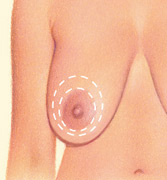
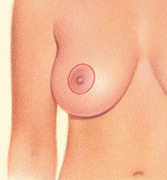
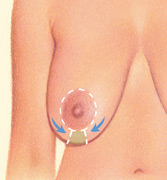
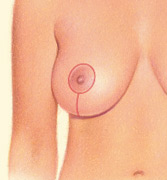
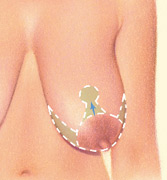
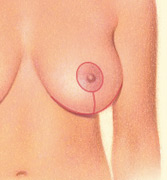
There are three common incision patterns:
-
- Around the areola
-
- Around the areola and vertically down from the areola to the breast crease
-
- Around the areola, vertically down from the breast crease, and horizontally along the breast crease
Step 3 – Reshaping your breasts
After your doctor makes the incisions:
- The underlying breast tissue is lifted and reshaped to improve breast contour and firmness.
- The nipple and areola are repositioned to a natural, more youthful height.
- If necessary, enlarged areolas are reduced by excising skin at the perimeter.
- Excess breast skin is removed to compensate for a loss of elasticity.
Step 4 – Closing the incisions
After your breasts are reshaped and excess skin is removed, the remaining skin is tightened as the incisions are closed.
Some incision lines resulting from breast lift are concealed in the natural breast contours; however, others are visible on the breast surface. Incision lines are permanent, but in most cases, they will fade and improve significantly over time.
Sutures are layered deep within the breast tissue to create and support the newly shaped breasts. Sutures, skin adhesives, and/or surgical tape may be used to close the skin.
Step 5 – See the results
The results of your breast lift surgery are immediately visible. Over time, post-surgical swelling will resolve, and incision lines will fade.
Satisfaction with your new image should continue to grow as you recover and realize the fulfillment of your goal for breasts, which have been restored to a more youthful and uplifted position.
Potential Risks and Complications of Breast Lift Surgery
The decision to have breast lift surgery is extremely personal, and you’ll have to decide if the benefits will achieve your goals and if the risks and potential complications are acceptable.
Your plastic surgeon and/or staff will explain in detail the risks associated with surgery. You will be asked to sign consent forms to ensure that you fully understand the procedure you will undergo and any risks or potential complications.
The risks include:
- Unfavorable scarring
- Bleeding (hematoma)
- Infection
- Poor healing of incisions
- Changes in nipple or breast sensation, which may be temporary or permanent
- Anesthesia risks
- Breast contour and shape irregularities
- Skin discoloration, permanent pigmentation changes, swelling, and bruising
- Damage to deeper structures, such as nerves, blood vessels, muscles, and lungs, can occur and may be temporary or permanent
- Allergies to tape, suture materials, and glues, blood products, topical preparations, or injected agents
- Breast asymmetry
- Fatty tissue deep in the skin could die (fat necrosis)
- Fluid accumulation
- Excessive firmness of the breast
- Potential partial or total loss of nipple and areola
- Deep vein thrombosis, cardiac and pulmonary complications
- Blood clots
- Pain, which may persist
- Possibility of revisional surgery
You should know that:
- Breast lift surgery can interfere with diagnostic procedures
- Breast and nipple piercing can cause an infection
- Mastopexy surgery does not normally interfere with pregnancy, but if you are planning to have a baby, your breast skin may stretch and offset the results of mastopexy, and you may have more difficulty breastfeeding after this operation
Where will my surgery be performed?
A breast lift procedure may be performed in your plastic surgeon’s accredited office-based surgical facility, an ambulatory surgical facility, or a hospital. Your plastic surgeon and the assisting staff will ensure your comfort and safety.
When you go home
If you experience shortness of breath, chest pains, or unusual heartbeats, seek medical attention immediately. Should any of these complications occur, you may require hospitalization and additional treatment.
The practice of medicine and surgery is not an exact science. Although good results are expected, there is no guarantee. In some situations, achieving optimal results may require more than a single surgical procedure.
Be careful
Following your physician’s instructions is key to achieving the best possible breast lift results. The surgical incisions mustn’t be subjected to excessive force, abrasion, or motion during the time of healing. Your doctor will give you specific instructions on how to care for yourself.
Be sure to ask questions: It’s very important to ask your plastic surgeon questions about your breast lift procedure. It’s natural to feel some anxiety, whether it’s excitement about your anticipated new look or a bit of preoperative stress. Don’t be shy about discussing these feelings with your plastic surgeon.
What to Expect During Breast Lift Recovery
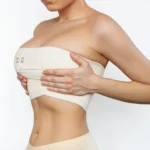
After your breast lift procedure is completed, dressings or bandages will be applied to the incisions. You’ll need to wear an elastic bandage or support bra during breast lift recovery to minimize swelling and support your breasts as they heal.
A small, thin tube may be temporarily placed under the skin to drain any excess blood or fluid that may collect.
You will be given specific instructions that may include: How to care for your breasts following surgery, medications to apply or take orally to aid healing and reduce the risk of infection, and when to follow up with your plastic surgeon.
How long do breast lift results last?
The final results of your mastopexy procedure will appear over the next few months as breast shape and position continue to settle. Incision lines are permanent but will continue to fade over time.
The results of your breast lift surgery will be long-lasting. Over time, your breasts can continue to change due to aging and gravity. But, you’ll be able to retain your new look longer if you:
- Maintain your weight
- Keep a healthy lifestyle
Special note: While a breast lift does not usually affect breast function if you are planning to become pregnant, discuss this with your plastic surgeon. Changes that occur in the breasts during pregnancy can minimize or reverse the improvement a breast lift provides. Likewise, plans for significant weight loss should also be discussed.
Benefits of a Breast Lift
Here are the key benefits of a breast lift:
- Lifted, firmer breast profile
- Repositioned nipples and areolas to a more natural height
- Reduced areola size if enlarged
- Improved breast symmetry
- Better fit in clothing and bras
- Option to combine with breast augmentation for added volume or breast reduction for a smaller size
- Long-lasting results with stable weight maintenance
Dear Dr. Balakhani,
You are held in highest esteem for your professionalism and your calm, soothing demeanor. Your presence in my life has been a blessing. At our introduction, I instantly knew that I could (and would) entrust my health care needs to you. I am immensely pleased with the results of my breast surgery! Thank you so very much! It is my pleasure to be in your presence. You are a kind, caring physician who exemplifies class. May you always be blessed in abundance.
Most sincerely,
Roberta.
Before and After Photos


How Much Does a Breast Lift Cost?
Cost is always a consideration in elective surgery. Prices for breast lift procedures can vary widely. Breast lift cost may vary based on the surgeon’s experience and geographic location.
Many plastic surgeons offer patient financing plans, so be sure to ask. At Mehdi Balakhani MD Plastic and Reconstructive Surgery, we offer Care Credit as one of your financing options.
Cost may include:
- Surgeon’s fee
- Hospital or surgical facility costs
- Anesthesia fees
- Prescriptions for medication
- Post-surgery garments
- Medical tests
Most health insurance plans will not cover breast lift surgery, related complications, or another surgery to revise the appearance of your breasts. You must carefully review your health insurance policy.
Your satisfaction involves more than a fee
When choosing a plastic surgeon for breast lift surgery, remember that the surgeon’s experience and your comfort with them are just as important as the final cost of the surgery.
Why Choose Dr. Mehdi Balakhani for Your Breast Lift Surgery in Delaware
Mehdi Balakhani, D.D.S., M.D., F.A.C.S., has been caring for patients in Delaware since 1982. He holds dual board certification in Plastic and Reconstructive Surgery and Oral and Maxillofacial Surgery, and has served as Chief of Plastic Surgery at Christiana Care Health System and as Director at St. Francis Hospital in Wilmington.
Peers and nursing staff have recognized him as a top Delaware doctor since 1992. He takes time to walk you through your sagging breast correction options honestly and clearly; no pressure, no rushing. Meet Dr. Balakhani, get to know the team, or view our before-and-after gallery before your visit.
Frequently Asked Questions
Can I breastfeed after a breast lift?
A breast lift generally does not interfere with the milk ducts needed for nursing. Results vary, so discuss your plans with Dr. Balakhani during your breast lift consultation so he can adjust his approach accordingly.
Will I need time off work after surgery?
Most patients return to desk work within one to two weeks. Physical jobs that involve lifting or strenuous activity typically require four to six weeks before you can safely return.
Is a breast lift covered by insurance?
Breast lift surgery is elective and typically not covered by health insurance. Flexible financing options are available. Visit our financing page to find a payment plan that works for you.
When will I see my final results?
You will notice an immediate improvement in shape right after surgery. Full results appear over the following few months as swelling resolves and tissue settles, and incision lines continue to fade over the first year.
Can I combine a breast lift with other procedures?
Yes. Many patients choose to pair a lift with breast augmentation for added volume, or with breast reduction for a smaller profile. Both can be done in a single surgical session. Your options will be reviewed during your consultation.
How long do breast lift results last?
Results can last many years, especially when you maintain a stable weight and a healthy lifestyle. Significant weight changes or future pregnancies can affect long-term outcomes, which is worth discussing before your recovery after breast lift surgery begins.
Words to Know
- Areola: Pigmented skin surrounding the nipple.
- Breast augmentation: Also known as augmentation mammaplasty, a surgical procedure to enlarge the breasts.
- Breast lift: Also known as mastopexy; surgery to lift the breasts.
- Breast reduction: Also known as reduction mammaplasty, the reduction of breast size by surgery.
- Excision: To remove the skin.
- General anesthesia: Drugs and/or gases used during an operation to relieve pain and alter consciousness.
- Hematoma: Blood pooling beneath the skin.
- Intravenous sedation: Sedatives are administered by injection into a vein to help you relax.
- Local anesthesia: A drug injected directly to the site of an incision during an operation to relieve pain.
- Mammogram: An X-ray image of the breast.
- Mastopexy: Surgery to lift the breasts.
- Sutures: Stitches used by surgeons to hold skin and tissue together.
Schedule Your Appointment with Our Breast Lift Expert
The first step to getting a breast lift in Delaware is to contact our office and schedule a consultation. Mehdi Balakhani, M.D., F.A.C.S., will be available to discuss the procedure in greater detail, answer questions, and review before-and-after photos with you. Call us at 302-368-8900 or fill out the online form to book your consultation.
Related Procedures
Related Posts
Labiaplasty delivers real results, but only when recovery is handled correctly. Many patients are surprised ... Breasts change. It happens gradually, and for many women, it’s only when clothes stop fitting ... Your breasts naturally change with age, pregnancy, and weight shifts, and your nipple position can ...